

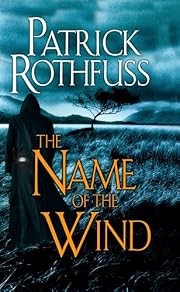
Click on a thumbnail to go to Google Books.
|
Loading... The Name of the Wind (2007)by Patrick Rothfuss
  
Best Fantasy Novels (11) » 52 more Top Five Books of 2013 (102) Favorite Series (54) Books Read in 2016 (160) Unreliable Narrators (36) Five star books (160) ALA The Reading List (58) Top Five Books of 2016 (113) Books Read in 2015 (266) Favourite Books (777) Top Five Books of 2018 (375) Unread books (275) Overdue Podcast (120) Best books read in 2011 (114) Epic Fantasy (7) Books Read in 2013 (578) KayStJ's to-read list (202) Magic schools (6) ORCID Book list (2) Books read in 2015 (11) Favourite Books (34) al.vick-series (192) BookTok Adult (3) First Novels (344)
 marsgeverson | Jan 12, 2023 | marsgeverson | Jan 12, 2023 |  What’s this? A fantasy book that is reminiscent of neither The Lord of the Rings nor A Song of Ice and Fire? It’s closer to A Song of Ice and Fire as there’s no fantasy creatures such as elves or orcs and it does take place in a vaguely medieval world, but most of the similarities end there. Patrick Rothfuss builds his fantasy of demon and sympathy magic slowly, with enough unexplained elements to allow this to feel like a self-contained world. It’s a bildungsroman novel, framed with an older Kvothe telling his life story. I have but two criticisms of the narrative. First, authors, please never use the phrase “if this was a story” because it is a story. I know I’m reading a book. I’m not becoming so lost in the narrative that you can ever get away with this. It doesn’t make anything more realistic. Second, most of the characters except for Kvothe are pretty thin characterizations, with a few notable exceptions. All of the women are “beautiful”, and while they do have other redeeming characteristics, there’s a definite sameness to the quick sketches Kvothe (and by extension, Rothfuss) draws. There’s some excuse to this, as these are the rememberings of a 15-year-old boy, and at that age, there is some biological predisposition to only noticing a swell of a breast or a sheet pressed tight against a body. And yet, this isn’t just a coming-of-age story. It’s a love story too. This makes the female characterizations slightly harder to swallow. However, there is a quiet, perfect expression of love in this book. A love that has weathered hard times. It is not a love that one would describe themselves having. It’s an observed love. Reading it, I feel that I’m reading Patrick Rothfuss talk about his own parents. From that seed of love in Kvothe’s life is born another one, and Rothfuss takes such careful time describing not just the girl of Kvothe’s attraction, but her spirit, his own emotions, and the wildness of an untamed affection that I feel he must be talking about his own girlfriend. Write what you know, yes, because it comes from the heart. Yet there is a loss that Kvothe talks about when he mentions her that makes me think perhaps this is a woman outside of Rothfuss’s life. It doesn’t really matter in any way, because Rothfuss is able to draw the reader into the world and leave them there. We believe Kvothe’s quiet heartache, his fierce anger, his dulled losses, and his exuberant joys. It’s a fantasy, yes, but there is also true wisdom that digs into the soul as well. I had a friend once tell me that what was underlined in a book was one of the most personal things you can do. With this book, I’ll keep those things to myself, save three, for those of you who finish this out and want to know more of that true wisdom. - Where do you think stories come from? Every tale has deep roots somewhere in the world. - Isn't that the way of the world? We want the sweet things, but we need the unpleasant ones. - Using words to talk of words is like using a pencil to draw a picture of itself, on itself. But there are other ways to understanding! (  ) gideonslife | Jan 5, 2023 | ) gideonslife | Jan 5, 2023 | Really great fantasy story -- utterly unputdownable. Beats Game of Thrones, in my opinion, although I liked that a great deal as well. Richly woven story, brilliantly told. Highly recommended. ( ) dria42 | Jan 2, 2023 | I picked this book up merely because the author hails from Stevens Point, WI. A very engaging, fantastical read. (  ) eliseGregory | Jan 1, 2023 | ) eliseGregory | Jan 1, 2023 | Quite simply, quite sharply, quite beautifully and quite honestly... One of the very best books I've ever read. ( ) Chris.Cummings | Dec 29, 2022 | no reviews | add a review
Is contained inContainsInspiredHas as a supplement
The tale of Kvothe, from his childhood in a troupe of traveling players to years spent as a near-feral orphan in a crime-riddled city to his daringly brazen yet successful bid to enter a difficult and dangerous school of magic. In these pages, you will come to know Kvothe as a notorious magician, an accomplished thief, a masterful musician, and an infamous assassin. But this book is so much more, for the story it tells reveals the truth behind Kvothe's legend. No library descriptions found. |

LibraryThing AuthorPatrick Rothfuss is a LibraryThing Author, an author who lists their personal library on LibraryThing. Popular covers
 Google Books — Loading... Google Books — Loading...GenresMelvil Decimal System (DDC)813.6 — Literature English (North America) American fiction 21st CenturyLC ClassificationRatingAverage: (4.36) (4.36)
|
||||||||||||||||||||||||||||||||||||||||||||||||||||||||||||||||||||||||||||||||||||||||||||||||||||||||||||||||||||||||||||||||||||||||||||||||||||


 Summer Group Read: The Name of the Wind (Patrick Rothfuss)

 Wikipedia in English (2)


 6
6
El nombre del viento es uno de esos títulos que a simple vista parecerían pretensiosos y que lo llevan a uno a buscar por todo el libro alguna clave que nos diga qué quiso decir el autor con ese nombre. Pero termina siendo muy concreto. Patrick Rothfuss sabe lo que hace, claramente. ¿Cuáles son los elementos por los que se destaca este libro por sobre los cientos de libros de fantasía actuales?
1) La consistencia: un libro de fantasía tiene por su pertenencia al género ciertos tropos que hay que respetar. Rothfuss toma los mínimos indispensables, y tira unos cuantos por la ventana, pero no todos. Su excelencia radica más en la ejecución, en las cosas que hace bien y en las que evita sabiamente, que en una trama revolucionaria o una prosa inmejorable.
Ejemplo principal: el sistema de magia del mundo de Kvothe. Todo libro de corte fantástico necesita algo de magia, entendiendo por ella no el uso de hechizos y cosas así si no un componente especial que permita a un "héroe" realizar cosas inalcanzables para la mayoría de los mortales. Sin este elemento, en mi opinión, un libro de este estilo no sería de fantasía si no de una cierta ficción realista no-histórica. Lo fantástico está unido a la magia, aunque esa magia sea en realidad tecnología (como en algunos libros que se cruzan con la ciencia ficción) o sea meramentet algún tipo de elemento que facilita la aparición de lo extraordinario en la trama.
Crear un sistema mágico es lo que da consistencia a todo el mundo de una novela fantástica, y por ello es muchas veces lo que hace que funcione o se rompa. Es difícil ser original en este sentido y crear un mundo que evite la magia clásica occidentalizada de los Harry Potters del mundo literario. Por eso Rothfuss, que entiende muy bien esto, le da a su magia la consistencia de la física, y la explica como si más que magia fuera simplemente termodinámica. La magia (llamada simpatía, sin explicar porqué pero es bastante obvio que se basa en la relación simpática entre objetos) en el mundo de Kvothe tiene leyes y consecuencias, y permite hacer cosas extraordinarias pero aún así ancladas en relaciones de: semejanza (de la parte al todo) y transferencia de energía (generalmente en forma de calor). Hay un componente un poco similar al vudú en ese tipo de magia pero por ahora Rothfuss logra evitar comparaciones odiosas tratando el tema con seriedad. Como esta magia es bastante limitada en alcance, también introduce la magia basada en los nombres, que es la más clásica de las clásicas magias del mundo, desde la mitología que elijas para acá. Y si bien en este primer libro Kvothe aún está buscando el nombre del viento, nos da a entender que este es un mundo donde, como en los libros, las palabras tienen poder. Saber el nombre verdadero de las cosas y saber usarlo le confieren a uno un poder mucho mayor al de la simpatía. Es un elemento que podría ser demasiado fantasioso y usado en exceso, por eso Rothfuss sabiamente nos da un sistema mágico más "realista" para demostrarnos que es un mundo no caótico, donde nadie tendría un poder absoluto.
2) La narrativa enmarcada: Rothfuss hace buen uso de este recurso al ser Kvothe el que esté contándonos su propia historia, a través del relato que le hace a un cronista. Las interrupciones del relato son apropiadas y los interludios en los que Kvothe explica a su escriba aspectos más personales del relato son moderados y útiles. Hay una creciente divergencia entre el Kvothe joven de la historia y el Kvothe narrador, que uno va percibiendo a medida que el relato avanza, pero el tono narrativo de Rothfuss/Kvothe es muy consistente y la prosa logra ser atrapante sin caer en recursos pesados para mantener la atención del lector. Usado por un escritor menos hábil, la narrativa enmarcada resultaría pesada, porque a uno le interesa más lo que cuenta el personaje que su situación actual y "estática" de narrador, pero Rothfuss agrega en cada interrupción del relato y regreso al presente narrativo algún elemento que mantiene la intriga del lector sobre qué habrá pasado para convertir a Kvothe en ese narrador tan distinto al héroe de su historia. Lo que sí me pareció "mejorable" es que Kvothe es demasiado perfecto en su relato, no duda nunca sobre su recuerdo o sobre los hechos en sí, sólo duda por momentos en cómo hacerles justicia. Me hubiera gustado verlo desviarse un poco más, o dudar de si los hechos fueron tan así como él los vivió, o si su recuerdo está manchado por la nostalgia o por algo más. Quizás en los libros posteriores aparezca algo más que modifique esa memoria casi eidética de Kvothe, pero es un detalle que como lector/escritor me gustaría haber visto más desarrollado.
3) El misterio
Rothfuss hace bien en presentarnos la historia de su mundo en cuentagotas, a través de conversaciones y cuentos mal contados o tergiversados a través de los siglos. Ahí usa muy bien el recurso de la "decadencia de las historias" que Robert Jordan aplica como piedra basal de su megasaga "The Wheel of Time". O sea, que las historias se van convirtiendo en leyenda y cambiando su sentido, hasta que sólo una minúscula parte mantiene su verdad. Hay muchas cosas que quedan picando para ir descubriendo en los libros siguientes: si Tehlu es una figura tan "cristiana" como parece (se asemeja a Jesús Thor), cuál es el objetivo de los Chandrian, qué tan diferentes a las hadas/elfos/faunos son los Fae (que confío en que van a demostrar ser seres interesantes y poco sujetos al cliché que indica su nombre, que está muy gastado en la literatura fantástica clásica y refiere a los pueblos Feéricos, o seres derivados de las hadas de las fábulas y mitos).
Donde creo que el misterio es abusado es en la presentación de los distintos pueblos, reinos y lenguajes de los humanos. No se notan las diferencias culturales entre los personajes más allá de decir que usan tal o cual lenguaje, y eso para mí es clave al crear un mundo fantástico. Si no, todo se tiñe de una especie de indistinción donde uno tiende a asociar los lenguajes, vestimenta y conductas a las de cualquier historia pseudo-medieval. En este punto, George R.R. Martin y Robert Jordan le sacan varios palmos de ventaja a Rothfuss ya que si algo hacen bien, eso es construir mundos y culturas bien diferenciadas y aunque en algunos aspectos sean asemejables a la cultura anglosajona clásica de este género, tienen la suficiente innovación para parecer nuevas. El uso de palabras como "demonios" y "ángeles", u otras palabras más que no tienen sentido fuera del marco de referencia de la civilización occidental y greco-latino-cristiana (como por ejemplo mencionar "los sofistas" cuando en su mundo sería mucha coincidencia que una escuela de pensamiento se llamara como la escuela de la grecia antigua) por parte de Rothfuss son un punto flojo en mi apreciación, ya que rompen un poco el ecosistema de sentido de la novela y da a entender que ciertas cosas en su mundo son iguales a las del nuestro porque sí. Pero bueno, tiene dos libros más para demostrarme que cada referencia o palabra que me parece mal usada tiene sentido en su mundo.
Conclusión
Es imposible juzgar por completo esta novela hasta que lea las dos que le siguen, pero por ahora le doy un 8/10 en mi escala, principalmente por lo bien narrado, por la carencia de pasajes donde pienso "esto está mal contado" o "podría haber narrado esto mejor", por la originalidad del protagonista que logra batir ciertas convenciones del género y mostrar que hay distinciones más sutiles en la trinidad héroe/antihéroe/villano (bien podría Kvothe ser los tres al mismo tiempo en algunos puntos de la historia), y principalmente por lograr mantener mi atención y acallar mi componente crítico durante casi todo el libro. Espero ansioso leer los próximos libros, y espero que mantenga lo bueno y mejore los poquitos puntos que me parece hacen falta. (